


Country's consumer market expected to gain momentum in 20262026/1/8 8:53:06(Beijing Time) Lange Steel
Growth in China's consumer market is expected to gain momentum this year, with improvements in household income expectations and consumer confidence, while service consumption will serve as a key driver boosting domestic demand, said Alfred Yin, consumer products and retail assurance leader at EY Greater China.
Yin said in a recent exclusive interview with China Daily that the country's emphasis on boosting consumption during the 15th Five-Year Plan (2026-30) period signals that consumption is no longer treated as a mere "short-term stimulus tool", but has been elevated to "a long-term strategy".
It places particular emphasis on coordinating efforts to boost employment, increase incomes and stabilize expectations, with the key to consumption growth being whether people have money, confidence and the willingness to spend, he noted.
Consumption is playing a fundamental role in stabilizing economic growth, expanding employment, bolstering domestic demand and strengthening domestic circulation.
He emphasized the significance of increasing fiscal spending on education, healthcare, eldercare and childcare, advancing housing system reforms, improving unemployment insurance and enhancing assistance mechanisms to bolster consumer confidence.
The tone-setting Central Economic Work Conference in December stressed the need to boost the domestic market by implementing consumption enhancement campaigns and urban-rural income growth plans, removing unreasonable restrictions hindering consumption and stimulating services consumption potential.
Yin said policy measures are expected to become more proactive in 2026. More efforts will be made to improve the social security system and optimize income distribution mechanisms to further enhance residents' willingness and ability to consume, he noted.
"High-quality supply in sectors such as telecommunications, healthcare and cultural tourism is unleashing consumption potential. For instance, smart healthcare services, 5G-enabled scenario applications and personalized medical experiences are stimulating new demand for services consumption," Yin said.
According to Yin, China's consumer market is currently at a critical stage of transition from "scale expansion" to "quality upgrading", with new potential being unleashed at a faster pace. Fresh consumption scenarios will be created through the use of digital technologies.
"Artificial intelligence-powered recommendations, virtual try-ons and intelligent customer service will see broader application in the retail and services sector, improving efficiency and optimizing personalized shopping experiences," he said.
Special initiatives should be advanced to boost consumption, and the supply of high-quality consumer goods and services should be expanded, according to the recommendations for the 15th Five-Year Plan adopted by the fourth plenary session of the 20th Central Committee of the Communist Party of China in October.
The country announced a raft of measures to expand the scope of the consumer goods trade-in program in January 2025, including new subsidies for purchasing digital products like smartphones, tablets, smartwatches and wristbands, as well as the increased number of categories for home appliances.
"The trade-in program is far more than a short-term stimulus, it's also an important lever for promoting structural economic reforms. It lowers the threshold for consumption and effectively stimulates households' willingness to purchase big-ticket categories, while driving consumption upgrading and technological iteration."
In addition, the deep integration of green consumption with the circular economy will be further improved, he said. More efforts should be made to accelerate the establishment of a nationally unified certification and labeling system for green products, with subsidies or tax incentives granted to energy-saving and low-carbon goods.
Consumption has become the main driving force behind China's economic growth. Final consumption expenditure contributed 53.5 percent to economic growth in the first three quarters of 2025, up 9 percentage points from the full-year figure of the previous year, said the National Bureau of Statistics.
Retail sales, a significant indicator of consumption strength, rose 4.5 percent year-on-year to 36.59 trillion yuan ($5.24 trillion) in the first three quarters of last year, according to the NBS.
Experts also called for efforts to nurture diversified purchasing scenarios and new types of consumption in the digital, green and intelligent fields.
Zou Yunhan, deputy director of the macroeconomic research office at the State Information Center's Department of Economic Forecasting, said that China's consumption market is poised for steady growth this year fueled by a series of supportive measures.
Zou highlighted that new business forms and new models related to consumption can better meet people's demand for consumption upgrading and motivate their purchasing enthusiasm, which in turn will provide fresh momentum and robust support for the sustained growth of the consumer market.
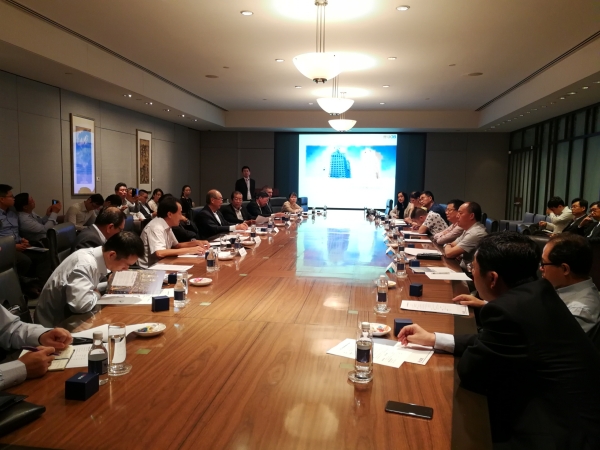
Lange Singapore Business Trip ..
To build The Belt and Road \"iron and steel industry business cooperation platform, Lange steel network organized a series of international busin.....
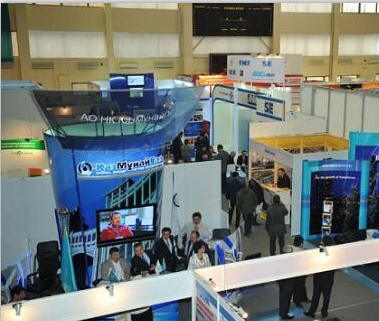
TUBE, WIRE, METAL AND WELDING ..
TEKNO is a biannual trade show covering the industries of TUBE, WIRE AND CABLE, WELDING AND CUTTING and METAL and is the best professional trade show .....

Lange Belt and Road Initiative..
Lange Belt and Road Initiative Business Trip to Russia will hold on 6-10th June, 2017. At present, countries in Asia and Europe are at a critical s.....