


Provinces set targets to ensure growth quality2026/2/6 8:29:52(Beijing Time) Lange Steel
Two-thirds of China's provincial-level governments have moderately lowered their GDP growth targets for 2026, as they emphasized boosting domestic demand and fostering emerging industries, a move that analysts said reflects a pragmatic and proactive stance aimed at promoting high-quality development.
The shift has increased the likelihood of China setting its real GDP growth target for 2026 at between 4.5 and 5 percent, analysts said, describing the range as achievable and consistent with longer-term goals.
Economists also called for greater attention toward achieving a reasonable pace of nominal GDP growth, which would help lift household incomes, shore up corporate profits, and anchor expectations for price level recovery.
As of Thursday, 31 provincial-level governments on the Chinese mainland had set their GDP growth targets for the first year of the 15th Five-Year Plan (2026-30) period — a closely watched indicator that carries implications both for this year's national growth target and the overall growth trajectory for the five-year period.
Of the 31 regions, 21 lowered growth targets compared with 2025, either by setting a lower numerical target or by shifting the wording from "above" a certain rate to "around" that rate.
Guangdong province, the country's largest provincial-level economy, set its 2026 growth target at 4.5 to 5 percent, from "around 5 percent" previously. Jiangsu province, the second-largest, set its target at 5 percent, compared with "above 5 percent" last year, signaling a more flexible stance.
Lu Ting, chief China economist at financial services group Nomura, described the decision of some provinces to moderately lower their GDP growth targets as "pragmatic and reasonable".
"The solid growth delivered by major economic provinces in 2025 was hard-won, but underlying data still points to continued headwinds," Lu said, citing the structural pressures from demographic changes and adjustments in the property sector.
With some major provinces lowering targets, Lu said he sees a rising possibility that China's national GDP growth target for 2026 will be set at between 4.5 and 5 percent in real terms, compared with the "around 5 percent" used since 2023.
Guan Tao, global chief economist at BOCI China, said that market expectations have increasingly converged on a national economic growth target between 4.5 percent and 5 percent as it is both "achievable" and consistent with long-term development goals.
The 2035 goal of reaching the per capita GDP level of moderately developed economies is estimated by Goldman Sachs to require average annual economic growth of about 4.5 percent between 2026 and 2030.
However, Su Jian, director of Peking University's National Center for Economic Research, warned that setting the target too low could undermine longer-term development goals and unsettle expectations.
"The growth target serves as an important signal to the public, and should remain 'around 5 percent' while emphasizing flexibility rather than a stringent binding requirement," Su said.
A total of 24 provincial-level governments set their 2026 GDP growth targets at above or around 5 percent.
Many regions vowed to strive for better results in actual work, while emphasizing bolstering service consumption, promoting infrastructure investments in key areas and nurturing emerging industries such as artificial intelligence.
Guo Kai, executive president of the CF40 Institute, said that China's real GDP growth this year is likely to stay close to 5 percent, while nominal GDP growth may improve from about 4 percent last year to around 4.5 percent or higher, with the latter reflecting both economic expansion and changes in price levels.
Guo said resilient external demand and steadier China-United States trade relations would support exports, while investment may recover as capacity adjustments in many manufacturing sectors near completion. Consumption, he said, is unlikely to rebound sharply but should remain resilient.
He added that using nominal GDP growth as a policy anchor could help China move out of prolonged subdued inflation more effectively, which should be feasible as it would be compatible with China's governance structure.
A CF40 Institute report noted earlier that persistently weak prices have squeezed corporate profitability and intensified fiscal pressure on local governments, adding that moderately raising nominal GDP growth would help improve sentiment and expectations across the economy.
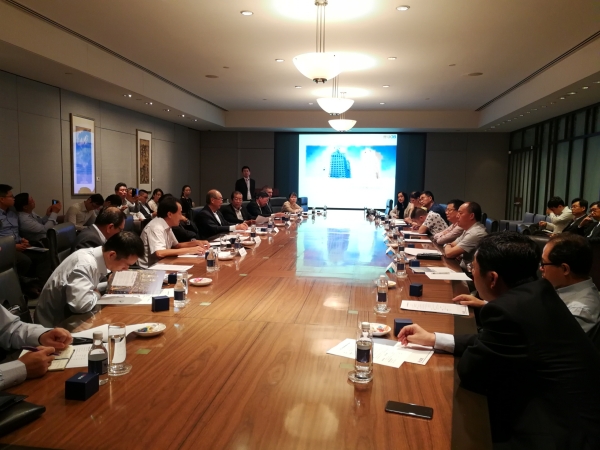
Lange Singapore Business Trip ..
To build The Belt and Road \"iron and steel industry business cooperation platform, Lange steel network organized a series of international busin.....
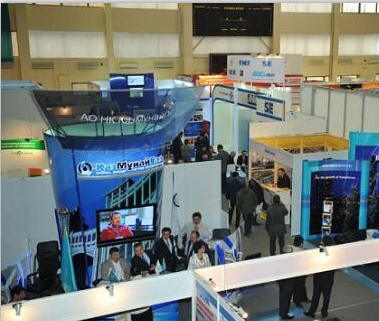
TUBE, WIRE, METAL AND WELDING ..
TEKNO is a biannual trade show covering the industries of TUBE, WIRE AND CABLE, WELDING AND CUTTING and METAL and is the best professional trade show .....

Lange Belt and Road Initiative..
Lange Belt and Road Initiative Business Trip to Russia will hold on 6-10th June, 2017. At present, countries in Asia and Europe are at a critical s.....