


AI drives shift in new-type power systems2026/2/11 8:55:13(Beijing Time) Lange Steel
China's push to fuse artificial intelligence with new-type power systems is steering a paradigm shift toward integrated, data-driven intelligent automation, hydrogen-enabled zero-carbon energy, and scalable storage to bolster resilience and efficiency, experts said.
China's digitalization drive is reshaping its energy sector, with AI integration in new-type power systems taking center stage.
"The digital transformation of power systems is a paradigm shift toward intelligent automation through an integrated methodology," said Zhou Aoying, a fellow at the China Computer Federation and professor at the School of Data Science and Engineering at East China Normal University, at the AI-Empowered New-Type Power System Innovation Forum earlier last month.
Zhou said the transformation should not rely on simply layering existing experience and technologies, but should return to fundamental energy laws, basic properties of data and core AI principles for systemic, root-level reconstruction.
Building on these methodological foundations, Zhou proposed a new automation paradigm for AI-empowered power systems grounded in "data intelligence" and "first-principles" thinking. He noted that today's AI is essentially "data intelligence", built on three elements: data, algorithms and computing power.
"The fundamental goal of smart tools is to automate cognition and decisionmaking," he said, adding that "data engineering is the scientific foundation of intelligent automation".
Zhou said AI has moved from theory to practice, pushing research into a data-centric "fourth paradigm" that discovers knowledge directly from data and emphasizes correlations alongside causality. He called "integration" the core methodology of the AI era, saying application scenarios, technological innovation and industrial development must be tightly coupled.
Turning to system design and deployment, Guan Xiaohong, an academician of the Chinese Academy of Sciences and professor at Xi'an Jiaotong University, outlined routes and practical schemes for building zero-carbon smart energy systems.
"Hydrogen-enabled zero-carbon smart energy systems can achieve local energy balance and be scaled through market-based pathways under economic feasibility, dispelling the notion that decarbonization inevitably raises costs,"Guan said at the forum.
Guan said large-scale, long-duration, and cost-effective storage is crucial for the wider use of renewables and for supplying green power to future computing and data centers. He cited the Yulin zero-carbon smart energy station in Shaanxi province, which uses an integrated architecture of intelligent sensing, resilient communications, autonomous computing, and coordinated optimization to couple hydrogen, electricity and heat. This forms a distributed "power-hydrogen-heat" supply/demand system with comprehensive energy utilization exceeding 92 percent.
Guan added that hydrogen-enabled zero-carbon systems are not only a technological innovation, but also a pathway to transform the energy structure and secure the green attributes of emerging productive forces.
He proposed combining centralized grids with distributed zero-carbon energy systems to balance and absorb renewables locally in real time, reduce reliance on backbone grid adjustments and strengthen grid resilience.
Guan said smart parks with physically traceable zero-carbon supply can offer a competitive edge for export-oriented firms. His team's solutions have been deployed in projects including the Xi'an Metro zero-carbon depot in Shaanxi, the Jinchuan zero-carbon mining area in Gansu province, and the Zhangbei zero-carbon park in Hebei province, forming a replicable, scalable solution.
From research to operations, Wang Licheng, a lecturer at the AI division of the Shanghai University of Electric Power, said that as China advances its energy transition and the share of wind and solar rises, building a new-type power system presents both opportunities and challenges.
Wang called AI-empowered power systems an emerging frontier with fundamental research questions and broad application scenarios. Wang said AI is reshaping the architecture and development path of new-type power systems.
He said large language models and reinforcement learning have achieved practical results in load forecasting and intelligent inspection.
Wang added that he will continue to advance AI innovation tailored to the power sector and promote the deep integration of algorithms across power generations, grids, loads and storage systems to help build a safer, lower-carbon and smarter energy outlay.
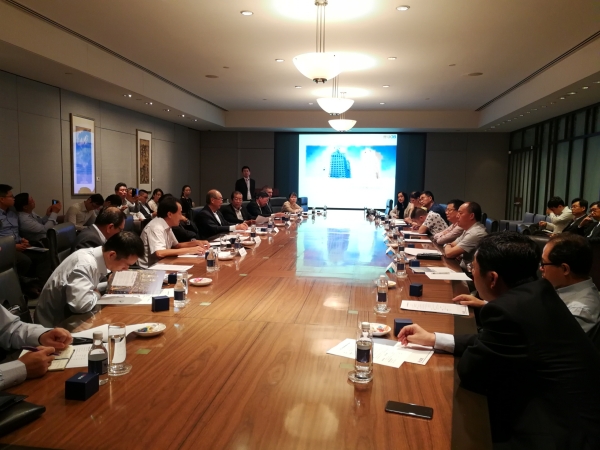
Lange Singapore Business Trip ..
To build The Belt and Road \"iron and steel industry business cooperation platform, Lange steel network organized a series of international busin.....
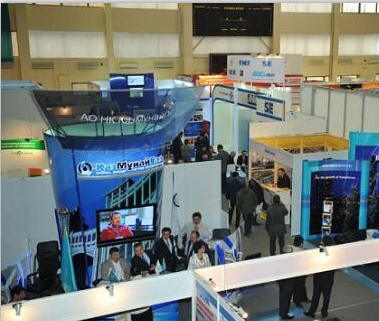
TUBE, WIRE, METAL AND WELDING ..
TEKNO is a biannual trade show covering the industries of TUBE, WIRE AND CABLE, WELDING AND CUTTING and METAL and is the best professional trade show .....

Lange Belt and Road Initiative..
Lange Belt and Road Initiative Business Trip to Russia will hold on 6-10th June, 2017. At present, countries in Asia and Europe are at a critical s.....