


Trillions in credit flow to back quality growth2026/4/16 11:17:06(Beijing Time) Lange Steel
Navigating a complex macroeconomic landscape, China's listed banks are channeling more credit into industries of the future, while shifting their lending focus toward innovation-driven companies and the long-term value of new quality productive forces.
The country's six largest State-owned commercial lenders collectively extended more than 9.4 trillion yuan ($1.38 trillion) in new loans last year, sustaining robust growth in areas such as strategic emerging industries and green finance.
By the end of 2025, Industrial and Commercial Bank of China had built up a sizable and fast-growing loan portfolio across key areas, with its outstanding balance of technology loans reaching 6 trillion yuan, up 19.9 percent year-on-year; green loans amounting to 6.7 trillion yuan, up 19.1 percent; and lending to core digital economy sectors exceeding 1 trillion yuan, growing 20.4 percent year-on-year.
Liu Jun, president of ICBC, said: "We have placed greater emphasis on fine-tuning both the structure and pace of lending, with our loans to key areas — including manufacturing, strategic emerging industries, green finance and inclusive finance — maintaining relatively rapid growth."
In the first two months of this year, the bank extended more than 2 trillion yuan in corporate loans, with cumulative lending of over 60 billion yuan to projects supporting major national strategies and security capacity building in critical sectors. Going forward, ICBC will maintain strong corporate lending in line with real economy demand, monetary policy guidance and its own operational conditions, said Wang Jingwu, senior executive vice-president of the bank.
In supporting the growth of emerging and future industries, ICBC will better serve the development of three international centers for sci-tech innovation and regional innovation hubs. It also plans to build an integrated sci-tech innovation service platform to provide full-cycle financial services for high-quality tech companies, including "little giant" enterprises and unicorns.
Liu said the bank aims to transform from a traditional capital intermediary into a comprehensive service provider integrating capital, information and efficiency. It will strengthen coordination across commercial banking, investment banking, asset management, custody, wealth management, trading and settlement services, focusing on key areas such as modern industrial systems, technological innovation, green transition and coordinated regional development to deliver comprehensive solutions for clients.
China Construction Bank has aligned its corporate lending with the goal of supporting the development of a modern industrial system and accelerating new quality productive forces. It has improved the alignment between credit supply and economic structural upgrading by supporting traditional industry transformation, fostering emerging and future industries, building modern infrastructure and advancing high-level self-reliance in science and technology.
Lei Ming, executive vice-president of CCB, said the bank is strengthening support for equity financing at the startup phase and the early stages of technological innovation, leveraging diversified tools such as equity, bonds, leasing and insurance to promote the integration of technological and industrial innovation.
CCB has steadily advanced China's pilot program for financial asset investment companies to invest in equities, setting up 28 pilot funds to enrich equity financing channels for tech firms. Last year, it underwrote 182 batches of sci-tech innovation bonds for 106 issuers, totaling 71.98 billion yuan.
The bank has also launched a range of innovative loan products to meet the diverse financing needs of various sci-tech innovation entities at different stages of development, particularly small and micro tech firms, with outstanding loans exceeding 160 billion yuan, up more than 50 percent. By the end of 2025, its outstanding tech loan balance reached 5.25 trillion yuan, serving nearly 320,000 enterprises.
Meanwhile, as of the end of 2025, Bank of China had increased its outstanding renminbi loans to customers in the Chinese mainland by 1.81 trillion yuan, up 9.9 percent compared with the previous year-end, providing stronger support for major national strategies, key sectors and weak links in the economy.
The bank also rolled out an action plan to support the development of the artificial intelligence industry chain. Its outstanding technology loans grew 18.78 percent, outstanding green loans rose 27.83 percent, and outstanding loans to the digital economy sector exceeded 880 billion yuan.
Zhang Hui, president of BOC, said 2026 marks the start of the 15th Five-Year Plan (2026-30), and the bank will step up support for technological innovation, strategic emerging industries, manufacturing and small and micro enterprises, while aligning with efforts to expand domestic demand and optimize investment structures. Technology finance will be placed at the core of the group's development strategy to better support industrial innovation.
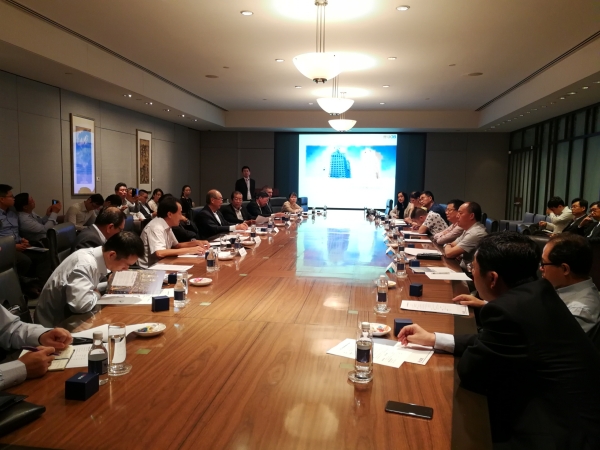
Lange Singapore Business Trip ..
To build The Belt and Road \"iron and steel industry business cooperation platform, Lange steel network organized a series of international busin.....
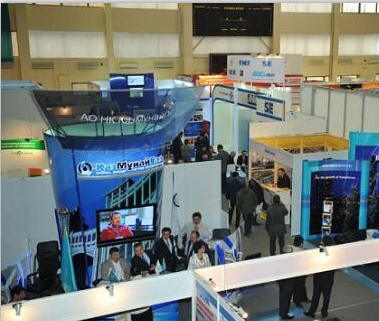
TUBE, WIRE, METAL AND WELDING ..
TEKNO is a biannual trade show covering the industries of TUBE, WIRE AND CABLE, WELDING AND CUTTING and METAL and is the best professional trade show .....

Lange Belt and Road Initiative..
Lange Belt and Road Initiative Business Trip to Russia will hold on 6-10th June, 2017. At present, countries in Asia and Europe are at a critical s.....