


Reform drive seen as vital in China-US tech ties2026/5/26 9:26:51(Beijing Time) Lange Steel
As competition between China and the United States increasingly centers on technological and industrial capabilities, China should focus on leveraging its strengths of a super-large market while accelerating institutional reforms to enhance innovation capacity, said a senior economist.
The remarks came as China and the US agreed to build a relationship of "constructive strategic stability". This, analysts said, may have defined the competition between the world's two largest economies as a race in overall capabilities, rather than a simple push toward decoupling or containment, as the two sides are expected to pursue cooperation as the mainstay alongside moderate competition.
"The race between China and the US (on the technological front) is ultimately about who can better leverage strengths while addressing weaknesses to perform better in scale, efficiency and returns," Zhang Yansheng, an expert on global economic affairs, said in an exclusive interview with China Daily.
"China and the US may ultimately become two major engines driving the global AI revolution and industrial transformation," he said. "Competition, in this sense, can promote progress."
According to Zhang, China has achieved significant progress in the new wave of technological and industrial transformation on the back of its vast domestic market, shaping pronounced strengths in digital connectivity, application scenarios, as well as industrialization and engineering capabilities.
The country entered the world's top 10 in the Global Innovation Index for the first time in 2025, while its research and development intensity has exceeded the average level of OECD economies.
Nevertheless, Zhang said China still faces shortcomings in innovation-related institutions and governance capacity, noting that China's ranking on the dimension of institutions in the Global Innovation Index lagged behind at 44th in 2025.
"What's most important is to improve the institutional environment and further modernize governance capacity, which, to some degree, comes down to the ability to deliver on commitments," Zhang said.
He stressed the importance of upholding the principle that market entities can do anything not prohibited by law, while governmental bodies may exercise powers only when authorized by law.
Zhang highlighted the need for China to better leverage capital markets to finance emerging technologies.
"The US has strong original innovation capabilities and highly developed capital markets, including venture capital and angel investment systems that continuously support technological breakthroughs," he said.
"For China, it is key to build more efficient financing mechanisms for the industrialization of AI and the transformation of traditional industries through AI technologies," he said, adding that Hong Kong could play a particularly important role in connecting domestic capital markets with global peers.
His remarks echoed recent policy efforts to improve the institutional environment for innovation, including reforms unveiled by the China Securities Regulatory Commission to make the ChiNext board more supportive of innovation-oriented companies.
Zhang also highlighted the scope for Chinese companies to expand cooperation and investment in the US, particularly via efforts at the local government level.
He noted that technologies such as AI, cloud computing, big data and blockchain are inherently distributed in nature, allowing broader space for technology-driven cooperation and engagement.
Foreign Ministry spokesman Guo Jiakun said last week that China and the US have agreed to launch intergovernmental dialogue on AI.
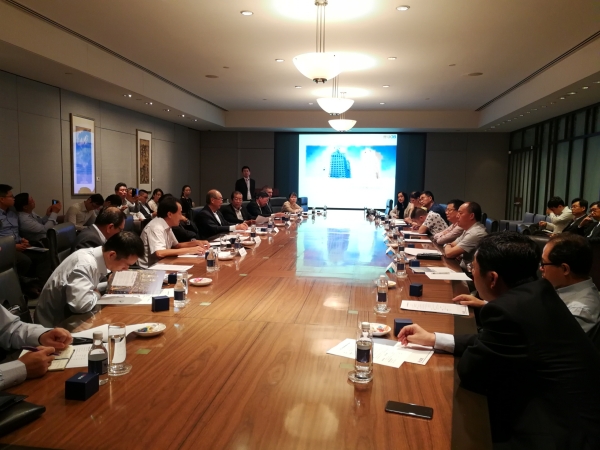
Lange Singapore Business Trip ..
To build The Belt and Road \"iron and steel industry business cooperation platform, Lange steel network organized a series of international busin.....
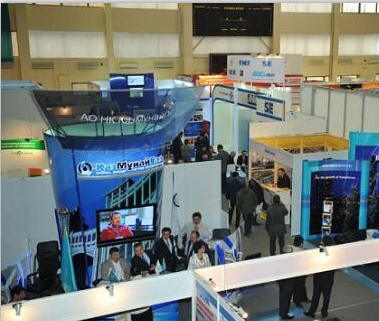
TUBE, WIRE, METAL AND WELDING ..
TEKNO is a biannual trade show covering the industries of TUBE, WIRE AND CABLE, WELDING AND CUTTING and METAL and is the best professional trade show .....
Lange Belt and Road Initiative..
Lange Belt and Road Initiative Business Trip to Russia will hold on 6-10th June, 2017. At present, countries in Asia and Europe are at a critical s.....