


China's top financial regulator pledges stricter oversight and risk control2026/6/9 8:42:19(Beijing Time) Lange Steel
China's National Financial Regulatory Administration announced that it held a meeting on Friday to deploy key near-term priorities, emphasizing the need to strengthen a sense of responsibility and urgency in preventing and defusing financial risks.
The meeting was chaired by Ding Xiangqun, Party secretary and minister of the NFRA.
The meeting stressed the importance of steadily advancing risk resolution among local small and medium-sized financial institutions and preventing major financial crises. The regulator pledged to further leverage the whitelist mechanism for ensuring the delivery of pre-sold housing projects and accelerate the formulation of financing frameworks suited to China's new real estate development model.
Authorities also called for active coordination in addressing local government debt risks and supporting the transformation and exit of local government financing vehicles. Additionally, it emphasized the need to guard closely against risks arising from external shocks and continuously improve contingency plans.
The meeting also underscored the need for the NFRA to fully implement the requirements for strict and robust supervision throughout all stages of the regulatory process. This includes tightening market entry standards, strengthening law enforcement, and imposing severe penalties on illegal and non-compliant activities.
The regulator vowed to strengthen accountability mechanisms to ensure responsibilities are effectively fulfilled, enhance the regulatory framework, and complete the compilation of the NFRA's list of powers and responsibilities. It also called for improving regulatory capabilities and steadily delegating certain supervisory responsibilities to county-level authorities.
The meeting called for efforts to promote the high-quality development of the financial sector. It called for different types of financial institutions to pursue differentiated development strategies, leverage their respective strengths, and complement one another. Authorities reaffirmed their commitment to reducing the number of small and medium-sized financial institutions while improving their quality and efficiency, and to optimizing the distribution of financial institutions according to local conditions.
The regulator also pledged to intensify efforts to curb disorderly competition in the financial sector — shifting the industry's focus from pursuing speed and scale toward prioritizing quality and efficiency — while continuously enhancing core competitiveness. Additionally, it called for expanding channels for capital replenishment to strengthen the capital base and long-term sustainability of financial institutions.
The meeting further stressed that Party committees at all levels must persist in improving conduct, enforcing discipline and combating corruption. The NFRA pledged to maintain a high-pressure stance against corruption, thoroughly investigate corruption issues underlying financial risks, and strengthen oversight and checks on the exercise of regulatory power.
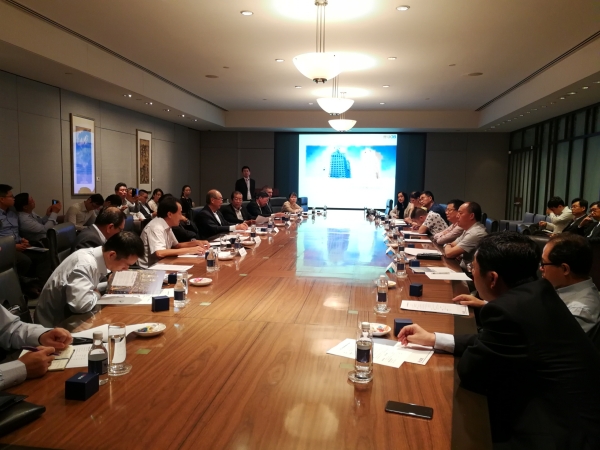
Lange Singapore Business Trip ..
To build The Belt and Road \"iron and steel industry business cooperation platform, Lange steel network organized a series of international busin.....

TUBE, WIRE, METAL AND WELDING ..
TEKNO is a biannual trade show covering the industries of TUBE, WIRE AND CABLE, WELDING AND CUTTING and METAL and is the best professional trade show .....

Lange Belt and Road Initiative..
Lange Belt and Road Initiative Business Trip to Russia will hold on 6-10th June, 2017. At present, countries in Asia and Europe are at a critical s.....