


First national urban renewal plan unveiled2026/6/18 6:35:40(Beijing Time) Lange Steel
China has unveiled its first national-level urban renewal plan, with market watchers expecting about 15 trillion yuan ($2.1 trillion) in investment during the 15th Five-Year Plan period (2026-30), as the government seeks to modernize aging infrastructure, upgrade residential areas and boost domestic demand, experts said.
The plan, released in May by the State Council — the nation's Cabinet — is the first national-level guideline for urban renewal and the first sector-specific plan to be implemented following the release of the broader five-year blueprint.
It outlines quantitative targets, including the renovation of 500,000 dilapidated urban residential units, 115,000 aging residential communities, 1,500 outdated industrial districts and factory zones, 4,000 urban villages and 365,000 kilometers of underground pipeline upgrades by 2030.
In this context, China is expected to invest at least 15 trillion yuan in urban renewal projects during the 15th Five-Year Plan period, averaging 3 trillion yuan annually, said a research note by Huachuang Securities.
That would be slightly higher than the 2.6 trillion yuan and 2.9 trillion yuan invested in 2023 and 2024, respectively, said the Ministry of Housing and Urban-Rural Development. The ministry said that in each of those years, about 60,000 urban renewal projects were completed nationwide.
Zheng Degao, vice-president of the China Academy of Urban Planning and Design, said that the targets were set based on "physical examinations" of cities and surveys of residents' needs.
For example, the renovation of aging residential communities will focus on those built 20 years or more ago, with flexible scope determined through special assessments, Zheng said.
A key challenge in urban renewal has been financing, and to this end, the plan identifies three sources of funding: fiscal funds, financial institutions and private capital.
Tang Daizhong, deputy director of the Department of Construction Management and Real Estate at Tongji University, said each funding source bears different risks, responsibilities and return expectations, and they must work in tandem.
Fiscal funds serve as a safety net, Tang said, adding: "Public money plays a foundational and guarantee role, but it can also act as equity to attract financial capital from banks and policy lenders."
He said that in a typical project, fiscal funds might cover 20 percent of the investment, with financial institutions providing the remaining 80 percent, leveraging public money to multiply total spending.
Financial capital also helps solve timing mismatches. Urban renewal projects often have long payback periods, while investors seek quicker returns.
"Long-term financial funds can extend repayment schedules so that future cash flows can cover the investment," Tang said, adding that private sector participation is best suited for operations.
"Some comprehensive developers and operators can use their funds to run projects and rely on future operating profits to cover initial investments," he added.
The central government has selected 15 cities to receive central fiscal support for urban renewal projects in 2026, marking the third consecutive year of a dedicated funding program that has already channeled more than 20 billion yuan to 20 cities, including Shanghai and Beijing.
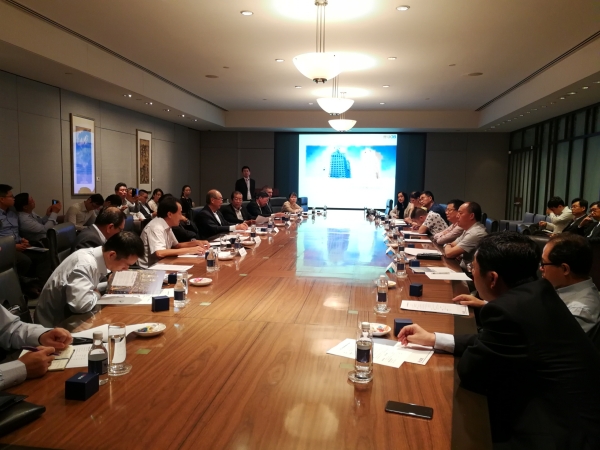
Lange Singapore Business Trip ..
To build The Belt and Road \"iron and steel industry business cooperation platform, Lange steel network organized a series of international busin.....
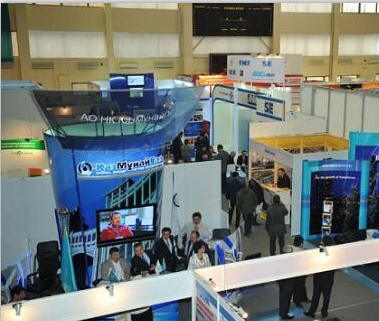
TUBE, WIRE, METAL AND WELDING ..
TEKNO is a biannual trade show covering the industries of TUBE, WIRE AND CABLE, WELDING AND CUTTING and METAL and is the best professional trade show .....

Lange Belt and Road Initiative..
Lange Belt and Road Initiative Business Trip to Russia will hold on 6-10th June, 2017. At present, countries in Asia and Europe are at a critical s.....