


Payment delays targeted to boost SME cash flows2026/9/15 9:17:00(Beijing Time) Lange Steel
China will push large companies to pay smaller suppliers faster and in cash, combining clearer payment rules with tougher oversight and financing support to ease cash flow pressures on small businesses, said government officials on Monday.
The move targets practices by some large companies that abuse their market advantages to deliberately prolong payment periods for small and medium-sized enterprises along their supply chains, said Ke Jixin, vice-minister of industry and information technology, during a news conference on Monday.
Such practices include obscuring when payment periods begin, delaying acceptance checks or settlement, and misusing commercial bills and electronic accounts receivable certificates, making it harder for SMEs to collect payments, Ke said.
To address these problems, the General Office of the State Council recently issued a circular outlining 10 measures to improve industry payment rules, strengthen oversight of large companies' payment practices, tighten regulation of noncash payment instruments and expand financing support.
Clearer payment rules will underpin the effort. Under the circular, authorities will encourage industry leaders to commit to paying SMEs in cash within 60 days of delivery, including through bank transfers. Industry regulators will also clarify when payment periods begin and how payments should be made, while setting acceptance standards and deadlines as well as maximum payment periods.
The provisions will be incorporated into model contracts, closing loopholes that allow buyers to prolong payment through delayed acceptance or unclear starting dates.
"This helps set clear boundaries for large companies to pay promptly, while giving SMEs certainty about when they can collect payments and in what form," Ke said.
To reinforce those rules, the circular calls for stronger enforcement and more detailed disclosures of payment practices, with State-owned enterprises expected to lead by example. Disclosure requirements for listed companies will also be refined to strengthen market discipline.
In addition, authorities will tighten controls on noncash payment instruments, capping payment terms for electronic accounts-receivable certificates at six months. The certificates record a buyer's promise to pay at a later date and can be used by suppliers to obtain financing.
Cao Yuanyuan, director of the financial market department at the People's Bank of China, said some large companies had used these certificates to delay payments while charging suppliers high financing fees, sometimes through affiliated factoring companies.
"We will continue to strictly control the terms of these certificates, further strengthen supervision of service platforms and push core enterprises to pay promptly in cash," Cao said.
Cao said delayed payments also had implications for monetary policy. As large companies expanded interest-free liabilities such as accounts payable, SMEs whose cash flow was squeezed had to borrow from banks.
"In effect, these SMEs bear the financing costs shifted onto them by large companies. This structural mismatch also hampers monetary policy transmission," she said.
To address this imbalance, authorities will support large companies in using bank loans and bond financing to replace outstanding payables and pay suppliers promptly in cash. The support is expected to help ease the short-term funding pressure large companies could face as they shorten payment periods.
For public-sector payments, the circular requires government procurement projects to be paid entirely in cash and calls for oversight of government investment funds from allocation to payment.
The drive to improve payment practices is in line with the goals of the recently issued SME development plan for 2026-30. The plan aims to have a long-term mechanism for preventing and resolving overdue payments largely in place by 2030, and achieve a cumulative growth of about 15 percent in revenue per employee at SMEs above designated size.
lijiaying@chinadaily.com.cn
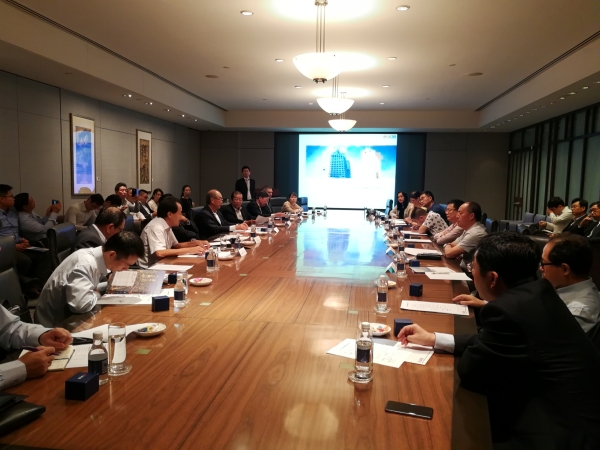
Lange Singapore Business Trip ..
To build The Belt and Road \"iron and steel industry business cooperation platform, Lange steel network organized a series of international busin.....
TUBE, WIRE, METAL AND WELDING ..
TEKNO is a biannual trade show covering the industries of TUBE, WIRE AND CABLE, WELDING AND CUTTING and METAL and is the best professional trade show .....

Lange Belt and Road Initiative..
Lange Belt and Road Initiative Business Trip to Russia will hold on 6-10th June, 2017. At present, countries in Asia and Europe are at a critical s.....