


China seen as anchor for global growth2026/10/8 9:22:00(Beijing Time) Lange Steel
China will remain an anchor of stability as global growth moderates, with its vast domestic market, industrial upgrading and policy support underpinning the country's resilience, while raising household incomes and strengthening social security will be key to bolstering domestic demand, a senior economist said.
"Looking across the world's major economies, few can achieve an annual growth of 4.5 to 5 percent," said Luo Zhiheng, chief economist and head of the research institute at Yuekai Securities, in a recent interview with China Daily.
The world's second-largest economy expanded 4.7 percent year-on-year in the first half, said the National Bureau of Statistics. Global growth, by comparison, is forecast to ease to 2.9 percent this year from 3.4 percent in 2025, the Organization for Economic Cooperation and Development said in its latest economic outlook.
Luo attributed that resilience in part to the country's vast and diverse domestic market, which provides a substantial buffer against external shocks. Differences in regional development and consumer needs also leave considerable potential for demand to grow, he said.
That scale also supports innovation by helping businesses recoup research and development costs, particularly in digital industries and artificial intelligence, Luo said, adding that decades of investment in education and research have produced a large pool of engineers to underpin technological advances.
High-tech manufacturing continued to outpace the wider industrial sector in August, with output rising 16.7 percent year-on-year, compared with 5.2 percent growth in overall industrial output, NBS data released in mid-September showed. Investment in aerospace, shipbuilding and computer manufacturing has also grown faster than overall investment, Luo said.
Alongside industrial upgrading, efforts to resolve local government debt have reduced hidden liabilities and borrowing costs and made borrowing more transparent, Luo said, adding that these gains — together with more resilient supply chains — have put China's economy on a firmer footing as it shifts toward higher-quality growth.
"Growth is likely to gradually stabilize in the coming months," Luo said, pointing to support from AI-related exports, infrastructure investment and earlier policy measures.
September's activity readings lent support to such a view. The official manufacturing purchasing managers' index edged up to 50.1 from 49.8 a month earlier, ending two months of contraction, while services and construction also swung back into growth territory, NBS data showed.
"We should fully recognize the positive factors, while taking full account of the difficulties," Luo said.
Stronger domestic demand will be key to sustaining growth, he said. The property adjustment has dampened purchases of furniture and home appliances, while cheaper home prices have weighed on households' willingness and ability to spend.
The transition in growth drivers has not injected strong momentum into income growth, as capital- and tech-intensive industries have provided a smaller boost to employment than the earlier expansion of property and infrastructure, Luo added.
Alex Muscatelli, director of economics at Fitch Ratings, also highlighted weak domestic demand, noting that net trade contributed an average of 0.9 percentage point to China's real GDP growth between 2020 and 2025.
Continually positive contributions mean external demand is generally outpacing demand for imports, which is closely linked to demand for consumer and investment goods, Muscatelli said.
Inadequate pensions and basic public services for low-income households continue to constrain consumption, said Ju Jiandong, chair professor at Tsinghua University's PBC School of Finance, at a forum in mid-September, noting that the central government still has fiscal maneuverability.
To address these constraints, Luo called for raising households' share of national income and strengthening social security, alongside more fiscal spending on childcare, education and eldercare.
Luo proposed channeling more State-owned capital into social security to help raise pensions for both urban and rural residents. Higher dividend payouts by listed companies could also increase household income from assets, he said.
Over the longer term, Luo pointed to the need for advanced manufacturing and services to develop in tandem, with manufacturing strengthening national competitiveness and services creating jobs and expanding consumption.
Wider market access for private capital, stronger competition and better oversight would help improve services quality and meet household needs, Luo said, adding, "The most fundamental way to raise household incomes is to create jobs."
Contact the writers at zhangchenxu@chinadaily.com.cn
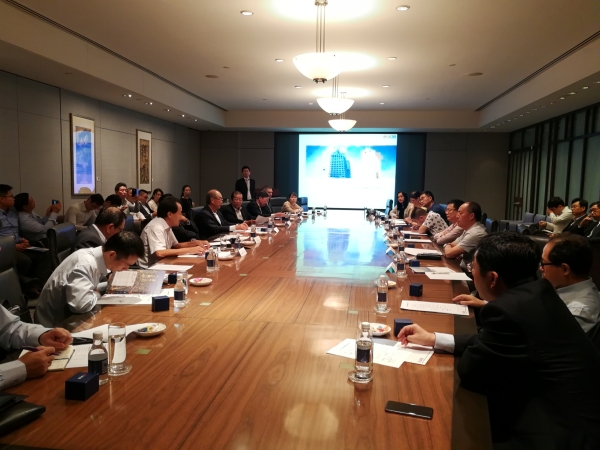
Lange Singapore Business Trip ..
To build The Belt and Road \"iron and steel industry business cooperation platform, Lange steel network organized a series of international busin.....
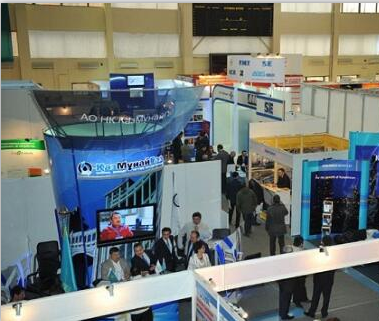
TUBE, WIRE, METAL AND WELDING ..
TEKNO is a biannual trade show covering the industries of TUBE, WIRE AND CABLE, WELDING AND CUTTING and METAL and is the best professional trade show .....

Lange Belt and Road Initiative..
Lange Belt and Road Initiative Business Trip to Russia will hold on 6-10th June, 2017. At present, countries in Asia and Europe are at a critical s.....